Welling Road upholstery cleaning insider tips Blackfen
If you live near Welling Road and your sofa, armchair, or dining chairs are starting to look a bit tired, you are not alone. Upholstery picks up everyday life quietly: a splash of tea, a bit of pet hair, the damp smell of winter coats, crumbs, body oils, the lot. The good news is that Welling Road upholstery cleaning insider tips Blackfen can make a real difference when you know what actually works, what to avoid, and when to stop fiddling and call in proper help.
This guide is written to help you make better decisions, get better results, and protect your furniture for longer. We will look at how upholstery cleaning works, the shortcuts professionals rely on, the mistakes that cost people money, and the practical signs that a piece needs more than a quick vacuum. To be fair, once you understand the basics, upholstery care becomes far less stressful.
Why Welling Road upholstery cleaning insider tips Blackfen matters
Upholstery looks simple until it isn't. A fabric sofa can hide a surprising amount of dust, skin flakes, pet dander, pollen, and spill residue deep in the fibres. If you live on or near Welling Road in Blackfen, you will probably know the rhythm: a busy hallway, family life, school bags dropped on the arm of the sofa, then a bit of rain tracked in during a grey afternoon. Upholstery takes the hit, day after day.
The reason local insight matters is that not every fabric, stain, or piece of furniture reacts the same way. A velvet chair, for example, needs a gentler hand than a synthetic rental sofa. A dining bench with food spills has different needs from a lounge suite that mainly collects dust. The better you understand those differences, the less likely you are to damage the material or leave a stain ring behind. And yes, a stain ring is one of those annoying little surprises that seems to appear after you thought the job was done.
Another reason this topic matters is timing. Upholstery cleaning is easiest when dirt has not had weeks to settle in. Fresh spills can often be controlled more effectively, while older marks may require targeted stain removal or deeper cleaning. Waiting too long usually means using more product, more effort, and sometimes more risk.
For many homes, upholstery care is also about health and comfort, not just appearance. Dust build-up can make a room feel stuffy. Pet odours can linger even when the room itself is clean. And a damp, badly cleaned chair can smell worse than the original spill. Not ideal. That is why many people pair upholstery care with related services such as sofa cleaning, rug cleaning, or curtain cleaning when they are doing a proper refresh of a room.
How Welling Road upholstery cleaning insider tips Blackfen works
Good upholstery cleaning is part inspection, part chemistry, and part patience. The process usually starts with identifying the fabric type, the construction of the furniture, and the nature of the soil or stain. That sounds technical, but in plain English it means you should not treat every chair the same way.
Here is the basic logic professionals use:
- Check the fabric and care label where available.
- Test a small hidden area before using any liquid or solution.
- Remove dry debris first with vacuuming and careful brushing.
- Treat stains by type rather than scrubbing randomly.
- Use controlled moisture so the padding beneath does not stay wet too long.
- Extract or blot properly so residue is lifted out, not pushed deeper in.
- Dry the upholstery fully with airflow and sensible room conditions.
The single biggest mistake people make is over-wetting. It feels like the sensible thing to do, but too much liquid can spread the stain, leave browning marks, or soak the filling. Once that padding underneath gets damp, you can end up with a smell that no one wanted. A bit of restraint goes a long way.
For heavier soiling, a deeper clean may be needed. That might involve hot water extraction for suitable fabrics, low-moisture methods for delicate items, or specialist spot treatment for stubborn marks. The right method depends on the item, not just the stain. If you are unsure, the safest route is usually a careful inspection and a conservative first pass.
In many homes, upholstery cleaning also sits alongside broader home care. People often book it with carpet cleaning or, for smaller residential jobs, steam carpet cleaning so the whole room feels fresher. That makes sense, because a spotless carpet under a grubby sofa looks a bit unfair, doesn't it?
Key benefits and practical advantages
There is more to upholstery cleaning than making a sofa look nice for visitors. Yes, appearance matters, but the practical gains are often bigger than people expect.
- Better day-to-day hygiene: removing dust, crumbs, and allergens helps furniture feel cleaner and more comfortable.
- Longer fabric life: regular care reduces fibre wear caused by grit and ground-in dirt.
- Improved odour control: food smells, pet odours, and stale moisture can be tackled before they settle in.
- Better stain outcomes: fresh marks are easier to treat than old, oxidised stains.
- More accurate buying decisions: once you know how a fabric responds, you can judge whether a quick clean or a deeper treatment is worth it.
There is also a financial angle. Replacing a sofa or a set of dining chairs costs far more than maintaining them properly. A carefully cleaned upholstery item often lasts longer, looks more inviting, and supports the overall feel of a room. It is one of those chores that quietly pays for itself over time.
Expert summary: the best upholstery results usually come from three things working together: correct fabric identification, low-risk stain treatment, and thorough drying. Miss one of those and the finish tends to suffer.
If you are managing a home with pets or children, you will notice the difference even faster. A weekly vacuum and the occasional deeper clean can prevent that dull, lived-in haze that slowly creeps over fabric. Nothing dramatic. Just a more pleasant room to sit in, which is the point really.
Who this is for and when it makes sense
This advice is useful for a wide range of people in Blackfen, especially around Welling Road where homes, flats, and family houses can all have different upholstery needs. You may find it especially relevant if you are:
- a homeowner trying to maintain a favourite sofa or statement chair;
- a tenant wanting to leave furniture in better condition;
- a landlord or letting agent preparing a property between occupancies;
- a pet owner dealing with hair, odour, or the occasional accident;
- someone with allergies who wants a cleaner living environment;
- a business owner with waiting-room seating or office upholstery that sees daily use.
It also makes sense to act before visible damage becomes obvious. If the armrests look darker, the seat cushions feel tacky, or there is a faint musty smell when the room warms up, those are early warning signs. You do not have to wait until a stain is dramatic enough to annoy you from across the room.
Commercial settings have their own pressures. Reception seating, hospitality chairs, and office soft furnishings can suffer from high traffic, frequent contact, and more frequent spill risks. For those environments, a planned cleaning schedule often works better than a one-off rescue job. If that sounds familiar, it may be worth looking at commercial carpet cleaning alongside upholstery care so the whole space stays presentable.
Step-by-step guidance
If you want a practical approach, start here. This is the methodical version, not the frantic "grab a sponge and hope" version.
1. Identify the fabric
Look for care labels, manufacturer notes, or any documentation you still have. If you do not have them, inspect the texture and construction carefully. Natural fibres, blends, synthetics, velvet, and leather-look materials can each behave differently. If in doubt, assume the fabric is more delicate than it looks.
2. Vacuum thoroughly
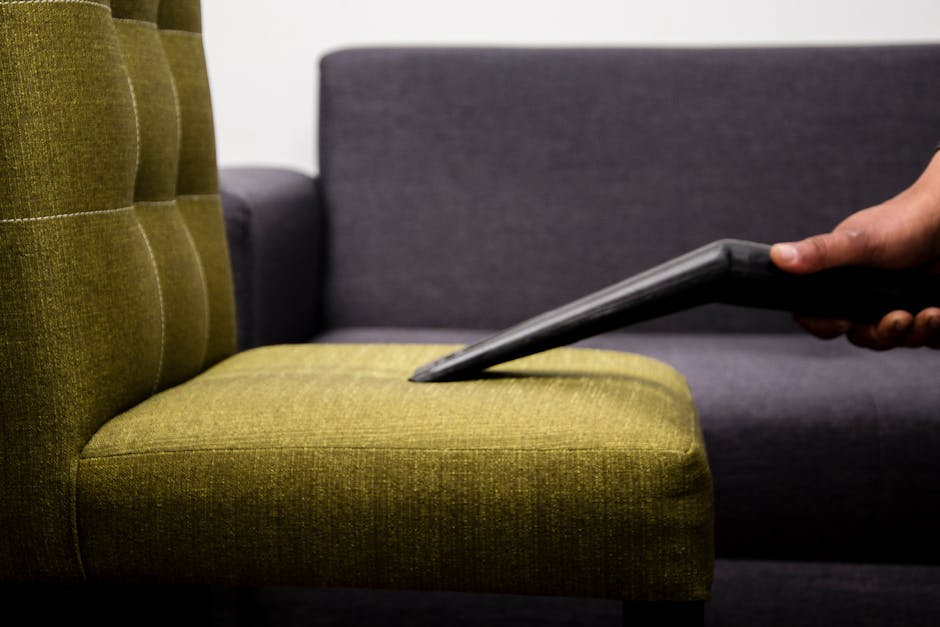
Use an upholstery attachment and work slowly over seams, piping, cushion edges, and under cushions. The key is not speed. The key is lifting out loose dirt before it turns to mud when dampness is added. A soft brush attachment can help with fluff and pet hair, though it can also flick debris around if you go too hard at it. Gentle wins here.
3. Spot test every cleaner
Test a hidden patch first, even if you have used the product before. Fabrics age, dyes vary, and a previous cleaning product may already have changed the surface a little. Wait and check for colour change, stiffening, or water marks.
4. Tackle stains by type
Food, drink, grease, ink, and pet stains do not all respond the same way. Blot liquid spills rather than rubbing them. For greasy marks, a product designed to break down oils usually works better than plain water. For pet accidents, odour control matters as much as stain removal, which is why some people pair upholstery care with pet stain odour removal.
5. Use the least moisture necessary
Apply solution sparingly. Work in sections. If you need to lift a stain, repeat the process lightly rather than flooding the area. This is where many DIY attempts go wrong, and honestly it happens because the job looks so simple until the fabric starts behaving like a sponge.
6. Rinse or extract residue
Leftover cleaner can attract dirt faster later on. That is why extraction or careful damp wiping matters. You want the cleaning agent gone along with the soil, not left sitting in the pile.
7. Dry properly
Open windows if conditions allow, switch on air movement, and avoid sitting on the furniture until it is fully dry. A slightly cool, dry airflow is usually more helpful than heat blasted directly onto the fabric. Give it time. Rushing drying is how weird smells happen.
Expert tips for better results
These are the little things that separate a decent result from a really good one.
- Work from the outside of a stain inward. That helps prevent spread and tide marks.
- Use white cloths or plain towels for blotting. Coloured cloths can transfer dye. It happens more than people think.
- Lift solids before wet cleaning. If you are dealing with food residue, remove the physical debris first.
- Refresh cushions in rotation. Turning and swapping cushions reduces uneven wear and pressure marks.
- Watch for hidden issues under the arms and along seams. Those zones collect the most grime.
- Keep a small stain kit ready. A fast response is often the best response.
A good local tip for homes around Blackfen is to pay attention to heating and ventilation when cleaning upholstery in colder months. In a chilly room, fabric can feel dry on the surface while the inside still holds moisture. That little difference can matter. It is one of those things you only really learn the hard way, once.
If you need a deeper clean than spot treatment can handle, a specialist upholstery service can make sense. You can also compare fabric care with other furnishings that need similar attention, such as mattress cleaning or rug cleaning, especially if you are aiming for a full-home refresh.
Common mistakes to avoid
Most upholstery damage does not come from one huge disaster. It comes from small, repeated mistakes. A bit frustrating, but true.
- Scrubbing hard. This can fray fibres, spread stains, and push dirt deeper into the pile.
- Using too much cleaner. More product does not mean better cleaning. Usually it means more residue.
- Ignoring the fabric type. What works on one sofa may ruin another.
- Skipping the test patch. A five-minute test can save a very expensive headache.
- Over-wetting the padding. This leads to longer drying times and potential odour problems.
- Using random household products on stains. Some DIY tricks are harmless, some are not. Vinegar and baking soda get talked about a lot, but they are not universal fixes.
- Reusing dirty cloths. That can put old soil right back onto the fabric.
Another mistake is waiting until the upholstery looks obviously dirty before acting. By then the issue is often deeper than the surface. Light maintenance is cheaper, quicker, and less stressful. Simple as that.
Tools, resources and recommendations
You do not need a cupboard full of gear to keep upholstery in good condition. In most homes, the essentials are fairly modest.
| Tool or product | Why it helps | Best use |
|---|---|---|
| Upholstery vacuum attachment | Lifts dust and crumbs from seams and cushions | Routine cleaning and weekly upkeep |
| Microfibre cloths | Useful for blotting and light damp wiping | Fresh spills and controlled spot work |
| Soft upholstery brush | Helps loosen pet hair and surface dirt | Dry soil removal before wet cleaning |
| Fabric-safe cleaning solution | Targets common stains without harsh treatment | Stain-specific spot cleaning |
| Dry towels | Absorb excess moisture quickly | Blotting and post-clean extraction |
As for professional help, look for clear information on process, insurance, and pricing. It is sensible to understand how a business approaches safety and payment before booking, especially for work inside your home. Pages such as insurance and safety, health and safety policy, payment and security, and pricing and quotes are useful starting points when you want that reassurance.
And if you want to know a bit more about the company before moving ahead, it never hurts to check the about us page. Small detail, but it often tells you whether the business feels organised and transparent.
Law, compliance, standards, or best practice
Upholstery cleaning itself is not usually a heavily regulated activity in the way some specialist trades are, but good practice still matters. In a home setting, the main concerns are safety, fabric care, and avoiding damage. In a commercial setting, you also need to think about access, scheduling, staff safety, and minimising disruption.
From a practical UK perspective, sensible best practice includes:
- using cleaning agents according to their instructions;
- keeping electrical equipment safe and dry;
- avoiding slippery floors during and after cleaning;
- ventilating rooms properly;
- making sure anyone carrying out the work understands the fabric and risks involved.
If a service provider is entering your home, it is reasonable to expect transparent terms, clear complaint routes, and responsible handling of personal information. That is where pages like terms and conditions, complaints procedure, and privacy policy become part of the trust picture. Not glamorous, perhaps, but very useful.
For businesses that care about ethical operations and sustainability, it can also be worth reviewing recycling and sustainability and the modern slavery statement. Those pages may not clean a chair faster, obviously, but they do tell you something about standards behind the scenes.
Options, methods, or comparison table
Different upholstery situations call for different approaches. Here is a straightforward comparison to help you decide what makes sense.
| Method | Best for | Strengths | Watch-outs |
|---|---|---|---|
| Vacuuming and maintenance | Routine care and light dust build-up | Low risk, quick, affordable | Won't remove embedded stains or odours |
| Targeted spot cleaning | Fresh spills, isolated marks | Efficient, precise, useful for urgent issues | Can leave rings if moisture is not controlled |
| Low-moisture upholstery cleaning | Delicate fabrics and regular maintenance | Faster drying, gentler on some materials | May not suit deep, oily contamination |
| Hot water extraction | Durable fabrics with deeper soil | Strong soil removal, good for heavier use | Needs skill to avoid over-wetting |
| Professional stain treatment | Older, stubborn, or high-value items | More targeted and usually safer | May cost more, depending on condition |
In practice, the best choice is often a blend. A home might need maintenance vacuuming most of the time, spot treatment for the occasional spill, and a deeper professional clean once the fabric starts to look dull. That combination tends to age furniture well without overdoing it.
Case study or real-world example
Here is a realistic example from an everyday sort of situation. A family living close to Welling Road noticed their three-seater sofa had developed dark marks on the arms, a faint smell near the seat cushions, and a patch on one seat where a drink spill had been left too long. Nothing dramatic. Just one of those slow build-ups that happens when life is busy.
They started with a careful vacuum, removed the cushions, and checked for any visible care label guidance. The fresh-ish drink mark responded well to blotting and a mild fabric-safe treatment. The darker arm areas needed more attention because the grime had built up over time from skin contact and day-to-day use. In the end, the main lesson was simple: the earlier marks were dealt with, the easier the result. The longer-standing areas improved, but they needed patience.
The family also realised the odour issue was not just the sofa itself. A nearby rug and curtains were contributing to the room feeling stale. Once they dealt with the room as a whole, the space felt noticeably fresher. That is a fairly common pattern, truth be told. Upholstery rarely acts alone.
If your situation sounds similar, a broader refresh may help. The combination of sofa cleaning, curtain cleaning, and carpet cleaning can make a room feel transformed without replacing a single piece of furniture.
Practical checklist
Use this as a quick pre-clean and post-clean guide.
- Identify the fabric type or check for a care label.
- Vacuum the whole item, including seams and under cushions.
- Test any cleaner on a hidden area first.
- Blot spills; do not scrub aggressively.
- Use the smallest amount of moisture needed.
- Treat stains according to the stain type.
- Extract or blot out all residue.
- Allow full drying before use.
- Rotate cushions if the design allows it.
- Call in help if the item is delicate, valuable, or badly stained.
Quick takeaway: if the fabric is unknown, the stain is old, or the item matters to you, be cautious first and adventurous later. That saves a lot of hassle.
Conclusion
Welling Road upholstery cleaning insider tips Blackfen come down to a few honest principles: know your fabric, remove dry soil first, use as little moisture as possible, and dry everything properly. The rest is just good judgement and a bit of patience. Not exciting, perhaps, but it works.
Whether you are dealing with a well-loved sofa, a pair of dining chairs, or a full room that needs freshening up, the smartest move is usually the one that protects the fabric while improving the finish. And if you decide the job is bigger than you want to handle alone, that is perfectly fair. Some pieces deserve a careful professional touch.
Get a free quote today and see how much you can save.
Sometimes the best home improvements are the quiet ones: a cleaner seat, a fresher room, a little less worry when you sit down at the end of the day.
Frequently Asked Questions
How often should upholstery be cleaned in a typical Blackfen home?
For most homes, regular vacuuming is worth doing weekly, while deeper upholstery cleaning is often needed every 6 to 12 months depending on use, pets, children, and spill history. High-traffic furniture may need attention more often.
Can I clean upholstery myself or should I use a professional?
Light dusting, vacuuming, and some spot treatment can often be handled at home. If the fabric is delicate, the stain is old, or the item is expensive, professional cleaning is usually the safer choice. It depends on the fabric and your confidence level, really.
What is the biggest mistake people make with upholstery stains?
The most common mistake is scrubbing too hard or using too much liquid. That can spread the stain, damage fibres, and leave moisture in the cushion padding. Gentle blotting and controlled cleaning work much better.
Does upholstery cleaning remove pet odours?
It can help a lot, especially when the odour is in the surface fabric. Strong or repeated pet odours may need targeted treatment, which is why pet stain odour removal is often recommended alongside general upholstery care.
How do I know if my sofa fabric is safe for wet cleaning?
Look for a care label if one is available, and always test a hidden area first. If the fabric is velvet, silk-like, antique, or otherwise delicate, a cautious low-moisture approach is usually wiser. When in doubt, go gently.
Why does my sofa smell worse after cleaning sometimes?
That often happens when too much water has been used or the fabric has not dried properly. Moisture trapped in the padding can create a musty smell. Good airflow and careful drying are essential.
Is steam cleaning always the best option for upholstery?
No. Steam or hot water extraction can work well on suitable fabrics, but it is not right for everything. Some materials respond better to low-moisture methods. The fabric should decide the method, not the other way around.
What should I do about an old stain that has already set?
Start with a careful inspection and a test patch, then use a stain-specific approach rather than a one-size-fits-all cleaner. Older stains may improve rather than disappear completely, so set your expectations sensibly.
Can upholstery cleaning help with allergies?
It may help reduce dust, dander, and other particles sitting in the fabric, which can improve comfort for some people. It is not a medical treatment, of course, but cleaner upholstery can make a room feel fresher and less stuffy.
How long does upholstery take to dry?
Drying time varies with fabric type, room temperature, airflow, and how much moisture was used. Light cleaning can dry relatively quickly, while deeper methods take longer. The important thing is not to rush use before the fabric is fully dry.
Should I clean the whole room at once or just the sofa?
If the room has curtains, rugs, and carpets that are also holding dust or odour, a fuller clean can give a much better result. A freshly cleaned sofa in a stale room can look great but still feel a bit off. The whole space matters.
How can I tell if a cleaning company is trustworthy?
Look for clear information on pricing, safety, insurance, terms, and complaints handling. Transparent pages such as pricing, insurance, and policies are usually a good sign. Straight answers beat flashy promises every time.